 PCOS Weight Loss
Protein Per 100 Calories: A Simple PCOS Guide
An explainer on how to calculate protein per 100 calories, which foods come out highest, and how that ratio feeds the meal score's protein part.
Published
Quick answer
Protein per 100 calories is grams of protein divided by calories, times 100. It measures protein density rather than portion size, and it's the reference the meal score compares against 7 g per 100 kcal.
Key takeaways
- Protein per 100 calories = grams of protein ÷ calories × 100; it measures density, not portion size
- The meal score's protein reference is 7 g per 100 kcal, a comparison point, not a target
- Edamame and cottage cheese are especially protein-dense among the site's recipes
- Raising protein density usually means swapping an ingredient, not eating a larger portion
- Weight Loss Mode shows calories and macros; Gentle Mode scores meals with no calories or scale
Protein per 100 calories is the grams of protein in a food divided by its calories, multiplied by 100 — a way to compare how protein-dense foods are, no matter the portion size. It's also the reference figure behind the protein part of the meal score in the PCOS Weight Loss app.
A food can carry plenty of protein in absolute terms and still come out low on this measure, if it also carries a lot of calories from fat or starch. The ratio, not the grams alone, is what the protein part of the score is built around.
What does protein per 100 calories actually mean?
Two meals can both contain about 20 g of protein and still differ a lot in protein density. A meal with 20 g of protein and 200 kcal works out to 10 g per 100 kcal. A meal with the same 20 g of protein but 500 kcal works out to about 4 g per 100 kcal — same protein, lower density.
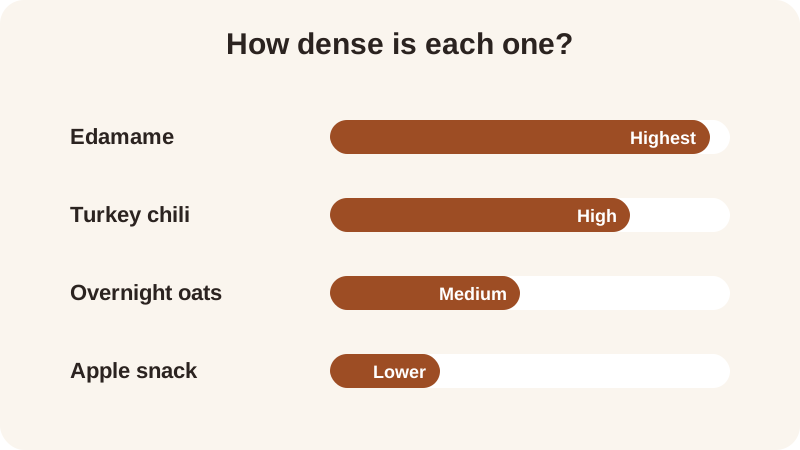
Density is what the protein part of the meal score actually measures, which is why a smaller bowl of a protein-dense food can score higher than a large bowl of something starchier. Portion size changes how much you eat, not how protein-dense the food is.
How do you calculate protein per 100 calories?
Take the protein in grams, divide by the calories, and multiply by 100. For the Cottage Cheese & Cucumber Snack, with about 20 g protein and about 180 kcal, that's 20 ÷ 180 × 100, or about 11.1 g of protein per calorie-equivalent 100 kcal — one of the more protein-dense snacks among the site's recipes.
Compare that with the Overnight Oats with Chia recipe, which has about 14 g protein and about 380 kcal, working out to roughly 3.7 g per 100 kcal. Both are reasonable foods to log; they simply sit in different places on the protein-density scale, and the meal score reflects that difference in its protein part.
Which foods are the most protein-dense per 100 calories?
Using the site's own recipes as a reference point, protein density per 100 kcal varies from roughly 3 g up to roughly 11 g depending on the mix of ingredients. The table below shows the figures worked out from each recipe's stated protein and calories.
| Recipe | Protein per 100 kcal (about) | Meal score |
|---|---|---|
| Cottage Cheese & Cucumber Snack | 11.1 g | 8.5 |
| Grilled Chicken & Quinoa Salad | 9.1 g | 9.1 |
| Edamame with Sea Salt | 8.9 g | 10.0 |
| Veggie & Egg Scramble | 7.6 g | 9.0 |
| Turkey Chili | 7.5 g | 9.3 |
| Overnight Oats with Chia | 3.7 g | 7.6 |
| Apple with Almond Butter | 2.7 g | 6.8 |
None of these foods is better or worse to eat than another — the table only shows which ones lift the protein part of a score the most relative to their calories. You can see the full ingredient breakdowns on pages like the Edamame with Sea Salt recipe or the Cottage Cheese & Cucumber Snack recipe.
How does protein per 100 calories fit into the meal score?
The meal score runs from 0 to 10 and combines four parts: protein, fiber, added sugar and quality, or how processed the food is. Protein and fiber are each 30% of the score, added sugar is 20% and quality is 20%, and the four parts are combined unrounded before the final number is rounded for display.
For the protein part specifically, the score compares a meal's grams of protein per 100 kcal against a reference of 7 g per 100 kcal. That reference is a general nutrition reference the score uses for comparison, not a clinical target or a number to chase at every meal. You can see the full breakdown of how all four parts combine on the how the score works page.
In Weight Loss Mode, the app shows calories, macros and a weight trend alongside this score, so you can see the protein-per-100-kcal figure next to the rest of the day's numbers. In Gentle Mode, there are no calories and no scale anywhere — the score still reflects protein density, it's just not shown next to a calorie count.
What's a simple swap that raises protein per 100 calories?
Swapping in a higher-density ingredient usually moves the number more than adding a larger portion of the same food. Stirring a few spoons of cottage cheese or Greek yogurt into a bowl of oats, for example, adds grams of protein per calorie without changing the calorie count by much, which raises the protein part of that meal's score while leaving fiber about the same.
The Greek Yogurt Berry Bowl recipe, with about 24 g protein and about 320 kcal, works out to about 7.5 g per 100 kcal — a useful comparison point if you're building your own bowl. Try your own combination in the meal score calculator to see how a single swap changes the protein, fiber and overall numbers before you commit to a plate.
Frequently asked questions
What counts as a high protein per 100 calories figure?
The meal score compares a meal's protein per 100 kcal against a reference of 7 g per 100 kcal. Foods above that, like edamame or cottage cheese, lift the protein part of the score more than foods well below it. It's a reference this score uses, not a clinical target.
Does protein per 100 calories change if I eat a bigger portion?
No. A bigger portion raises total protein and total calories together, so the ratio between them usually stays about the same. To raise protein per 100 calories, the mix of ingredients needs to change, not just the plate size.
Which snack has the highest protein per 100 calories here?
Among the site's recipes, Cottage Cheese & Cucumber works out to roughly 11 g of protein per 100 kcal, and Edamame with Sea Salt comes in at about 9 g per 100 kcal. Both sit well above the meal score's 7 g reference.
How is protein per 100 calories used inside the meal score?
Protein is one of four parts of the 0–10 meal score, worth 30% alongside fiber, added sugar and quality. The app estimates protein per 100 kcal from a photo or logged numbers and compares it with the 7 g reference before combining it with the other three parts.
General nutrition information, not medical advice. Figures are estimates. Talk to a doctor or dietitian about your own needs.