 PCOS Weight Loss
High Protein Options When Eating Out
A plain-language look at which restaurant and fast food orders carry more protein per 100 calories, with a worked example and simple swaps for fiber and added sugar when eating out.
Published
Quick answer
High protein options when eating out are usually plain grilled, roasted or steamed protein paired with a vegetable or bean side, since bread, pasta and fried coatings add calories without adding protein. Checking protein against calories, not just grams, separates two similar-looking plates.
Key takeaways
- Plain grilled, roasted or steamed protein with a vegetable side usually beats a bread- or pasta-based plate on protein per 100 kcal
- A crispy coating or cream sauce can add calories without adding protein, pulling the protein-per-100-kcal number down
- Sauces, glazes and dressings are common sources of added sugar that don't look sweet on a menu
- Asking for double vegetables or beans is a simple way to raise the fiber part of a restaurant meal's score
- Restaurant portions vary by kitchen, so any protein-per-100-kcal figure for eating out is a usual range, not exact
High protein options when eating out usually come down to the protein on the plate relative to its calories, not just the word "grilled" on the menu. A chicken fajita bowl and a chicken quesadilla can carry a similar number of protein grams but land very differently once that protein is divided by calories.
What makes a restaurant order high in protein?
A plate built around a plain protein — chicken, fish, shrimp, tofu, beans or eggs — paired with a vegetable or bean side tends to carry more protein per 100 calories than a plate built around bread, pasta, rice or a fried coating, because flour and oil add calories without adding protein. The meal score in the app uses protein per 100 kcal as 30% of the total, measured against a reference of 7 g per 100 kcal — a general reference the score uses, not a target for any single plate. The arithmetic behind that reference is laid out in this protein-per-100-calories guide.
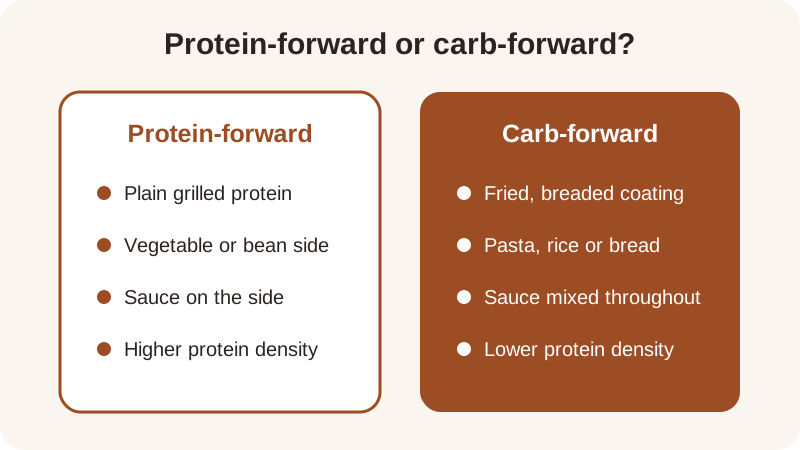
Sauces and batters are usually the two biggest hidden swings on a menu. A crispy coating or a cream-based sauce can add well over a hundred calories to a plate without adding much protein at all, which pulls the protein-per-100-kcal number down even when the portion looks the same size as a grilled version. Asking for a protein to be grilled, roasted, baked or steamed instead of breaded keeps the calorie side of that division smaller for the same grams of protein, which is usually the single biggest lever on a menu.
How much protein is in typical restaurant and fast food orders?
Here's how some common orders compare once protein is measured against calories instead of grams alone. These are ordinary, typical values for a usual restaurant portion; the exact numbers in front of you depend on the kitchen, the cut of meat and how it's prepared.
| Restaurant order, typical portion | Protein per 100 kcal (about) |
|---|---|
| Grilled chicken breast, plain (6 oz) | about 15 g |
| Grilled salmon fillet (6 oz) | about 10 g |
| Sirloin steak, grilled (6 oz) | about 12 g |
| Side salad, grilled chicken, dressing on the side | about 8 g |
| Chicken fajita bowl, no tortilla | about 7 g |
| Tofu and vegetable stir-fry, light sauce | about 6 g |
| Bean and chicken burrito, tortilla and cheese | about 5 g |
Worked example: a chicken fajita bowl with grilled chicken, black beans, peppers, onions and a scoop of rice, built without the tortilla, runs about 35 g of protein and 520 kcal. That's roughly 35 divided by 520, times 100 — about 6.7 g of protein per 100 kcal, just under the score's 7 g reference. Swapping the rice portion for extra beans, or asking for an extra ounce of chicken, is one way to push that number past the reference without adding a new side dish. See what 30 grams of protein looks like on an ordinary plate for more portion comparisons.
A fast food order built around a plain grilled chicken sandwich without the bun, or a grilled chicken wrap, tends to land higher than the same chain's crispy version: a typical crispy chicken sandwich runs about 450–550 kcal for roughly 28 g of protein, or around 5–6 g per 100 kcal, while a grilled version with a similar protein count but less breading and oil often reaches 8–9 g per 100 kcal. The protein amount barely changes — the coating and bun are doing most of the work on the calorie side.
What happens to fiber when you eat out?
Restaurant plates are often lower in fiber than a home-cooked meal because the vegetable or bean portion is usually smaller than the protein or starch portion on the plate, and fiber makes up another 30% of the meal score, measured against a reference of 2 g of fiber per 100 kcal. Asking for double vegetables, a side of beans or lentils instead of fries, or adding a side salad is a simple way to move that part of the score without changing the protein choice at all.
What happens to added sugar when you eat out?
Added sugar on a restaurant plate often shows up in places that don't look sweet: barbecue sauce, teriyaki glaze, certain dressings, ketchup by the spoonful and some marinades can each carry several grams of added sugar per serving. The meal score weighs added sugar against a flat reference of 12 g, and lower added sugar scores higher on that part of the total. Spotting added sugar on a label carries over to spotting it on a menu description — "glazed," "candied" and "honey-" are usually the words to notice first.
How does a restaurant meal score in the app?
A photo of a restaurant plate works the same way a home-cooked photo does in the app's food scanner: it estimates the food in the photo, splits the result into protein, fiber, added sugar and how processed the plate is, then combines the four parts unrounded before rounding the final 0–10 score for display. Restaurant photos tend to be a little looser than a home-cooked estimate, because hidden oil, butter and sauce are harder to judge from a photo than from a kitchen scale, and nutrition figures from any meal photo are estimates either way.
Weight Loss Mode shows the calories, macros and a weight trend next to that score, while Gentle Mode leaves out calories and the scale entirely and just shows the four-part score. Either way, the portion on the score screen is editable, so if the kitchen's serving looks larger or smaller than usual, it can be adjusted before the score is calculated — the app doesn't remember that adjustment for the next photo. Try tonight's order in the meal score calculator, or read the full breakdown on how the score works.
Frequently asked questions
What's the easiest way to raise protein without changing my order much?
Asking for an extra ounce or two of the same protein, or adding a side of beans, eggs or cottage cheese, raises the protein grams without adding a new dish. Because the meal score measures protein against calories, a small protein add-on usually moves the score more than swapping a side dish.
Are salads automatically a high protein option when eating out?
Not automatically. A salad built mostly from greens, croutons and a sweet dressing can carry very little protein for its calories. Adding grilled chicken, shrimp, chickpeas or a hard-boiled egg, and asking for dressing on the side, generally raises both the protein and the added-sugar parts of the score.
Does fried chicken ever score well on protein?
A fried coating adds calories from oil and batter without adding protein, so the same chicken breast carries fewer protein grams per 100 calories once it's breaded and fried compared with grilled or roasted. The protein itself hasn't changed; the calories around it have.
Can the app score a meal I'm eating at a restaurant?
Yes — a photo works the same way it does for a home-cooked meal: the app estimates the food and scores protein, fiber, added sugar and how processed it is. Restaurant estimates are a little looser than a home scale because portions and hidden sauce are harder to judge from a photo.
General nutrition information, not medical advice. Figures are estimates. Talk to a doctor or dietitian about your own needs.