 PCOS Weight Loss
High Protein Breakfast Ideas, Scored
A look at high protein breakfast ideas through the meal score's 7 g per 100 kcal protein reference, with worked examples, a comparison table and recipe scores.
Published
Quick answer
High protein breakfast ideas that clear the meal score's 7 g per 100 kcal reference include egg scrambles, Greek yogurt bowls, cottage cheese and tofu scrambles — each lifting the protein part of the 0–10 meal score before fiber or added sugar are counted.
Key takeaways
- Eggs, Greek yogurt, cottage cheese and tofu clear the meal score's 7 g per 100 kcal protein reference most easily.
- The 0–10 meal score weighs protein and fiber at 30% each, added sugar at 20% and quality at 20%.
- Veggie & Egg Scramble and Greek Yogurt Berry Bowl both score 9.0 out of 10 in the recipe set.
- Flavored yogurt can clear the protein reference while still carrying more than the 12 g added-sugar reference.
- Gentle Mode scores the same four parts of a breakfast with no calories or scale shown anywhere.
High protein breakfast ideas usually center on eggs, Greek yogurt, cottage cheese or tofu — foods that carry a lot of protein for relatively few calories. The meal score's protein reference is 7 g per 100 kcal, so these foods tend to lift the protein part of a breakfast's score the most.
Protein isn't the only thing the meal score looks at, but it's the part many breakfasts fall short on, since cereal, toast and pastries usually sit well under that 7 g per 100 kcal line. A protein-forward start also makes it easier to see, at a glance, how the fiber and added-sugar parts of the score move once fruit, oats or a sauce get added.
What counts as a high protein breakfast?
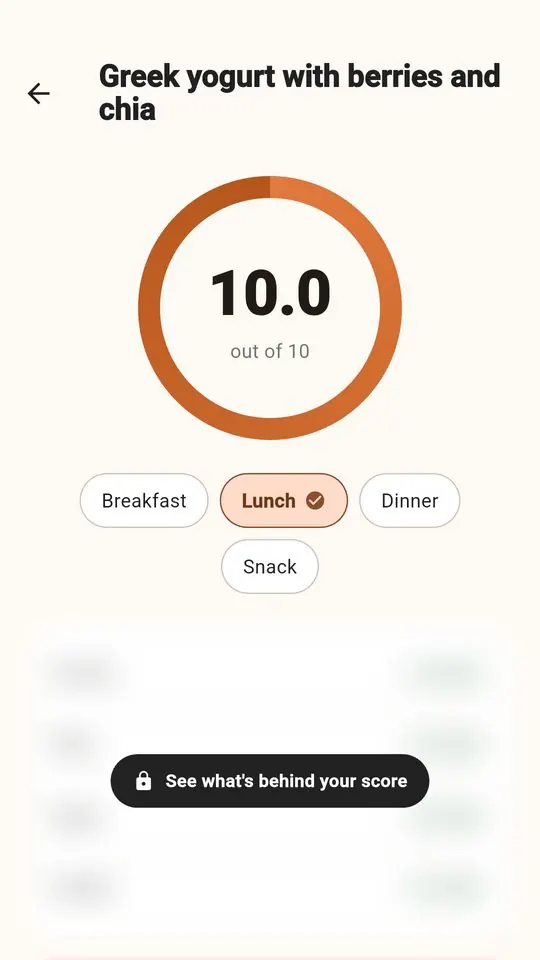
The meal score's protein reference is 7 g of protein per 100 kcal and its fiber reference is 2 g of fiber per 100 kcal — general nutrition references the score uses, not clinical targets. A breakfast that clears the protein line scores well on the protein part of the 0–10 meal score, which is 30% protein, 30% fiber, 20% added sugar and 20% how processed the food is. Protein is 30% of that total, so the grams of protein per 100 kcal you log for breakfast carries real weight in the final number, right alongside fiber.
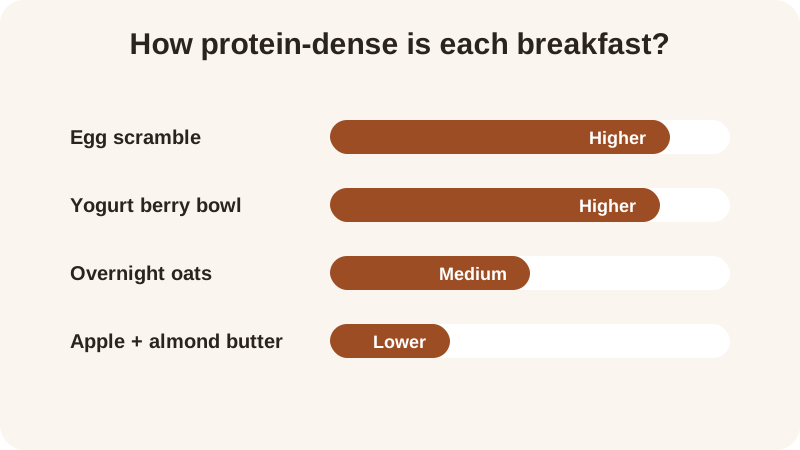
Two eggs scrambled with vegetables run about 12 g of protein and about 180 kcal, which works out to about 6.7 g per 100 kcal — just under the reference on their own. Adding a quarter cup of cottage cheese or a slice of turkey brings the same scramble closer to 8 g per 100 kcal, over the line.
For the exact arithmetic — grams of protein divided by calories, times 100 — the protein per 100 calories guide walks through more examples, and the reference itself is explained on the how the score works page.
How much protein is actually in a few common breakfasts?
Here is the per-100-kcal math for five breakfast-friendly foods from the site's recipes, worked out the same way the meal score does it.
| Breakfast, typical portion | Protein | Calories | Protein per 100 kcal (about) |
|---|---|---|---|
| Veggie & Egg Scramble | 26 g | 340 kcal | 7.6 g |
| Greek Yogurt Berry Bowl | 24 g | 320 kcal | 7.5 g |
| Cottage Cheese & Cucumber Snack | 20 g | 180 kcal | 11.1 g |
| Overnight Oats with Chia | 14 g | 380 kcal | 3.7 g |
| Apple with Almond Butter | 6 g | 220 kcal | 2.7 g |
The egg scramble and yogurt bowl both clear the 7 g per 100 kcal reference, so they score well on the protein part of the meal score before fiber or added sugar are even counted. The cottage cheese snack packs even more protein per 100 kcal, which is why it also works as a breakfast when it's paired with something like berries or a slice of toast for fiber.
A bowl of bran flakes with milk runs about 8 g of protein and about 220 kcal — close to 3.6 g per 100 kcal — and typically falls into the processed category the score's quality part uses, which counts processed food at 0.6 against 1.0 for minimally processed, by calories. Swapping in Greek yogurt or an extra egg is one way to move both the protein and quality parts of that breakfast's score.
How does added sugar change a high protein breakfast's score?
The added-sugar part of the score uses a flat 12 g reference — again a general nutrition reference, not a target — and lower added sugar scores higher on that part, worth 20% of the total 0–10 score. A flavored yogurt with 20 g of protein can still carry 15 to 20 g of added sugar per cup, which pulls the added-sugar part of the score down even while the protein part looks strong.
Plain Greek yogurt with fruit stirred in, like the berries in the Greek Yogurt Berry Bowl, keeps added sugar lower while still landing well above the protein reference. The high fiber snacks with protein guide covers the same swap for snacks later in the day.
Which breakfast recipes score highest overall?
The Veggie & Egg Scramble and the Greek Yogurt Berry Bowl both land at 9.0 out of 10 on the site's 0–10 meal score, with protein well above the reference and added sugar on the lower side. Both numbers come straight from the recipe pages, so you can check the math yourself before trying either one.
The Overnight Oats with Chia scores 7.6 — its protein per 100 kcal is lower, but it carries close to 10 g of fiber, well past the fiber reference, which keeps the fiber part of the score high even with less protein. All four parts — protein, fiber, added sugar and quality — are combined unrounded, and only the final number is rounded for display, which is why two breakfasts with similar protein grams can still land on different final scores.
What if eggs or yogurt aren't part of your breakfast?
Tofu, edamame, lentils and chickpeas carry comparable protein without dairy or eggs. A scramble made with tofu instead of eggs, or a bowl built around the ingredients in the Chickpea & Feta Salad made the night before, can both land protein well above the reference while adding fiber from the legumes. Edamame on its own carries 17 g of protein and 8 g of fiber for 190 kcal, which is why it shows up as a side as easily as a breakfast addition.
A tofu scramble with about 16 g of protein and about 220 kcal works out to about 7.3 g per 100 kcal, with fiber from the vegetables added on top.
If counting calories isn't something you want to do at breakfast, Gentle Mode scores the same meal on protein, fiber, added sugar and quality with no calories and no scale anywhere in the app. Weight Loss Mode shows that same four-part score next to calories, macros and a weight trend, if that's the version you'd rather use. Five rings — protein, fiber, movement, sleep and meals — show the same breakfast's contribution at a glance, whichever mode you're using. Either way, the fiber tracker keeps an eye on the fiber part of breakfast, since protein-heavy plates like eggs and cottage cheese often run light on fiber unless something like berries, oats or vegetables gets added too.
Frequently asked questions
What makes a breakfast count as high protein on the meal score?
The meal score's protein reference is 7 g of protein per 100 kcal, a general nutrition reference the score uses rather than a clinical target. A breakfast that clears that line, like an egg scramble or a Greek yogurt bowl, lifts the protein part of the 0–10 score before fiber or added sugar are even counted.
Is there a protein amount a breakfast needs to hit?
There's no fixed amount — the 7 g per 100 kcal figure is a reference the score compares your meal against, not a requirement. A breakfast under that line still gets a score; it just scores lower on the protein part, which is 30% of the total 0–10 number.
Which breakfast recipe scores highest on the app?
The Veggie & Egg Scramble and the Greek Yogurt Berry Bowl both score 9.0 out of 10, each with protein above the 7 g per 100 kcal reference and added sugar on the lower side. Both recipe pages show the full grams and calories behind the number.
Does oatmeal count as a high protein breakfast?
Overnight Oats with Chia carries about 14 g of protein for 380 kcal, close to 3.7 g per 100 kcal — under the protein reference on its own. It still scores 7.6 out of 10 because its fiber, close to 10 g, pushes the fiber part of the score up instead.
What are high protein breakfast options without eggs or dairy?
Tofu scrambles, edamame and legume-based bowls carry comparable protein per 100 kcal without eggs or dairy. Edamame alone carries about 17 g of protein and 8 g of fiber for 190 kcal, which is why it works as a breakfast addition as easily as a side.
General nutrition information, not medical advice. Figures are estimates. Talk to a doctor or dietitian about your own needs.